The Cost of Ignoring Online Reviews
Marketing, Online Reviews, Reputation Management
The Real Cost of Ignoring Your Online Reviews: Data and Solutions
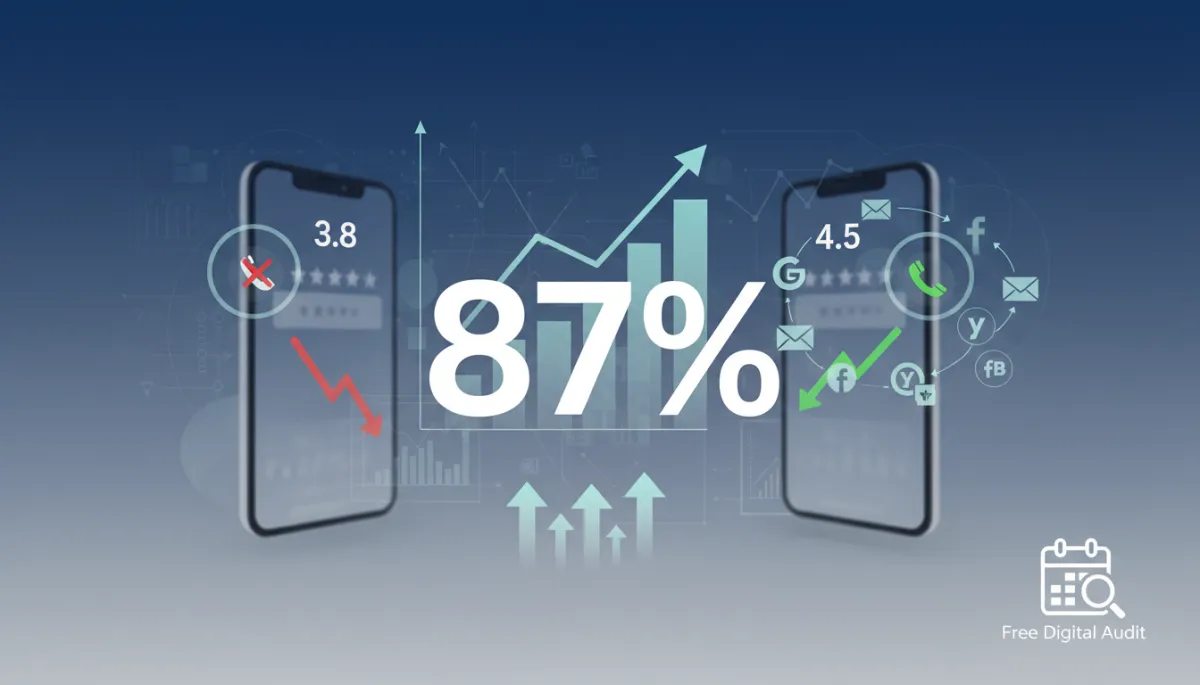
Around 87% of consumers read online reviews before purchasing. In some studies, that number climbs as high as 96–97%. If you run a small or mid-sized business, that means almost every new customer is checking your reputation before they call, click, or walk through the door.
Reviews Are Your New First Impression
For most buyers, your Google reviews business profile is the first real interaction they have with you. They skim your star rating, glance at how many reviews you have, and read a handful of recent comments. In about 30 seconds, they’ve decided whether to contact you—or your competitor down the street.
Research shows consumers read an average of seven reviews and spend nearly 14 minutes doing it. They also care about recency: 73% focus on reviews from the past month. If your last review is from last year, or you only have a handful, many will simply move on.
The Revenue Gap Between 3.8 Stars and 4.5 Stars
On Google, a 4.5-star rating gets the highest click-through rate—around 47%, higher than both 5.0 and lower ratings. Once your rating drops below 3.5 stars, 86% of consumers won’t even consider you. That’s not a small dip; that’s a shut-off valve on your pipeline.
Let’s put this into simple numbers for a local service business—say, an HVAC company or dental practice:
You appear in 1,000 local searches a month on Google Maps and Search.
At 3.8 stars, maybe 10% of people click or call: about 100 leads.
At 4.5 stars, with a stronger click-through rate, that could jump to 20%: about 200 leads.
If your average job is worth $300 and you close half your leads, the difference between a 3.8 and a 4.5 rating is roughly: 50 extra jobs x $300 = $15,000 per month in potential revenue. That’s $180,000 a year, driven largely by how your reviews look at a glance.
When Competitors Win by Doing One Thing Better
Consumers don’t just look at your rating. They compare you to whoever else appears on the same screen. If you have 23 reviews and a 4.2 rating, and the competitor next to you has 315 reviews and a 4.6 rating, who looks more established, more trusted, and more “safe” to choose?
Studies show that people want to see a minimum of around 40 reviews before they fully trust a rating. Competitors who consistently collect reviews cross that threshold, then keep going. They don’t just look better—they capture more market share because more people click them first. That higher volume of calls and clicks becomes a flywheel that keeps spinning in their favor.
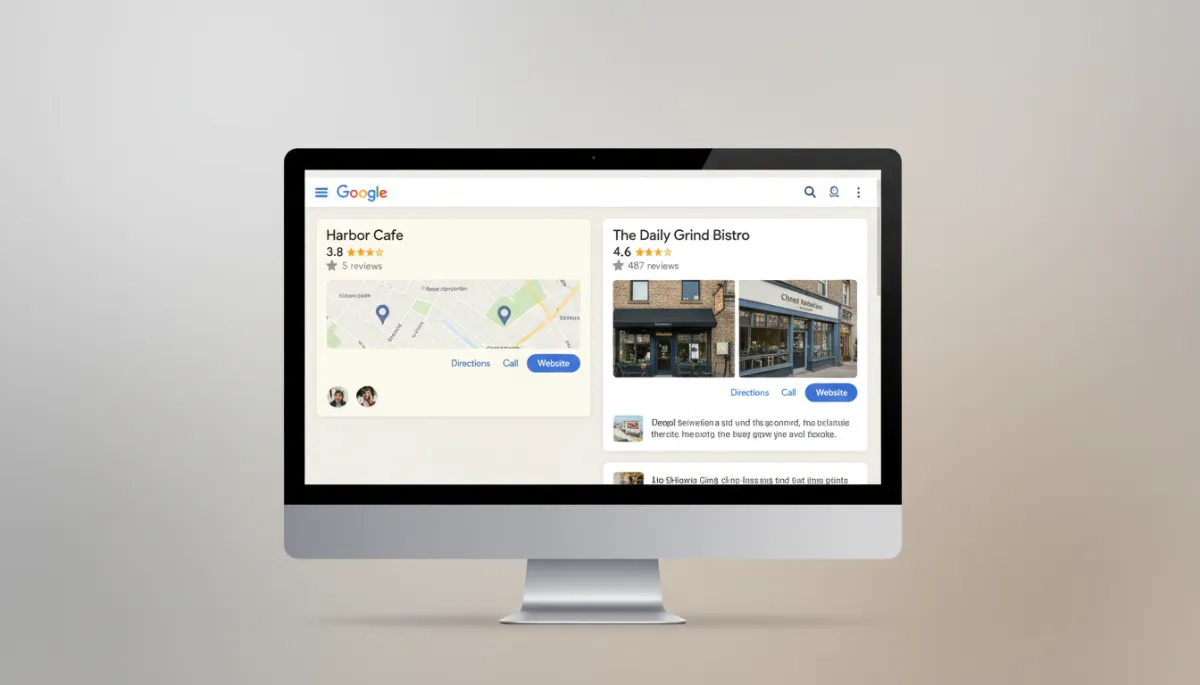
Higher volume and better ratings quietly funnel more calls to your competitors every month.
Why Most Businesses Don’t Ask for Reviews (Even When They Should)
If you’re thinking, “We deliver great service—why don’t we have more reviews?” you’re not alone. In our work with owners across industries, three reasons come up over and over:
It feels awkward. Your team doesn’t want to sound desperate or “salesy” asking for a review at the end of a job or appointment.
It’s inconsistent. Some staff remember to ask, some don’t. Busy days mean it gets skipped. There’s no standard process, so results are random.
Timing is off. You might send a review request days or weeks later—after the positive feeling has faded and the customer has moved on.
The result: your happiest customers stay silent, while the occasional upset one is highly motivated to post. That skews your online reputation and hurts your reputation management small business efforts, even if most of your work is excellent.
Automated Review Requests: How They Actually Work
The fix is not another script for your front desk. It’s a simple system that asks every happy customer for a review at the right time, automatically. Here’s what an automated review requests setup typically looks like:
Trigger after job completion. When a job is closed in your CRM, POS, or scheduling tool—or when you mark an appointment as completed—the review system is triggered. No one on your team has to remember to do anything.
Right-time delivery. The system sends a message within a few hours of completion, when the positive experience is still fresh and the customer is most willing to help.
Text vs. email. Text (SMS) usually gets the highest response rate—people see it right away and can tap once to leave a review. Email can be added as a backup for customers who prefer it. The key is one clear link, no friction.
Platform selection. You can direct customers to Google reviews business first (usually the most important for local visibility), then optionally to Facebook, Yelp, or industry-specific platforms. The system can rotate links so all key profiles grow over time.
Follow-up reminder. If they don’t respond, a polite reminder goes out a few days later. No nagging, just one extra nudge that often doubles your review volume.
This kind of review management process quietly runs in the background and turns a percentage of your everyday customers into steady, public proof that you do good work.
What Consistent Reviews Do for Ranking and Visibility
Google looks at three key things for local rankings: relevance, distance, and prominence. Reviews feed the “prominence” piece. It’s not just about your average star rating; it’s also:
How many reviews you have compared to similar businesses
How recent they are (review freshness)
How often new reviews come in (review velocity)
A consistent review cadence—say, 20–30 new reviews every month—signals that you’re active, trusted, and chosen frequently. That helps you appear higher in the map pack and local results, which in turn drives more calls and website visits. For online reviews small business impact, this is often the single highest-ROI marketing lever you can pull.
Handling Negative Reviews the Right Way
No matter how good you are, you will get negative reviews. The question is what you do with them. Only about a third of businesses respond to Google reviews at all, yet those that do see, on average, a 12% increase in new reviews. Consumers notice when you reply—and how you reply.
💡 Simple response formula: Thank them, acknowledge the issue, explain briefly (without arguing), and invite them to continue the conversation offline.
One or two bad reviews won’t kill your business. In fact, a few critical reviews among many positives can make your profile look more authentic. What hurts is when the only reviews you have are old and negative because you’re not actively collecting new, positive ones to balance them out.
Stop Leaving Your Reputation to Chance
Your future customers are already reading reviews. The only question is whether they are reading enough recent, positive, detailed feedback about you—or about the competitor who decided to take reviews seriously and put an automated system in place.
If you want to see exactly how your current reviews are helping or hurting you—and what an automated review request system could do for your ranking, call volume, and revenue—let’s look at the data together.
📌 Call to action: Book a free digital audit. We’ll review your existing profiles, rating, review cadence, and competitors, then give you a clear, practical plan to turn your online reviews into a predictable growth engine for your business.
