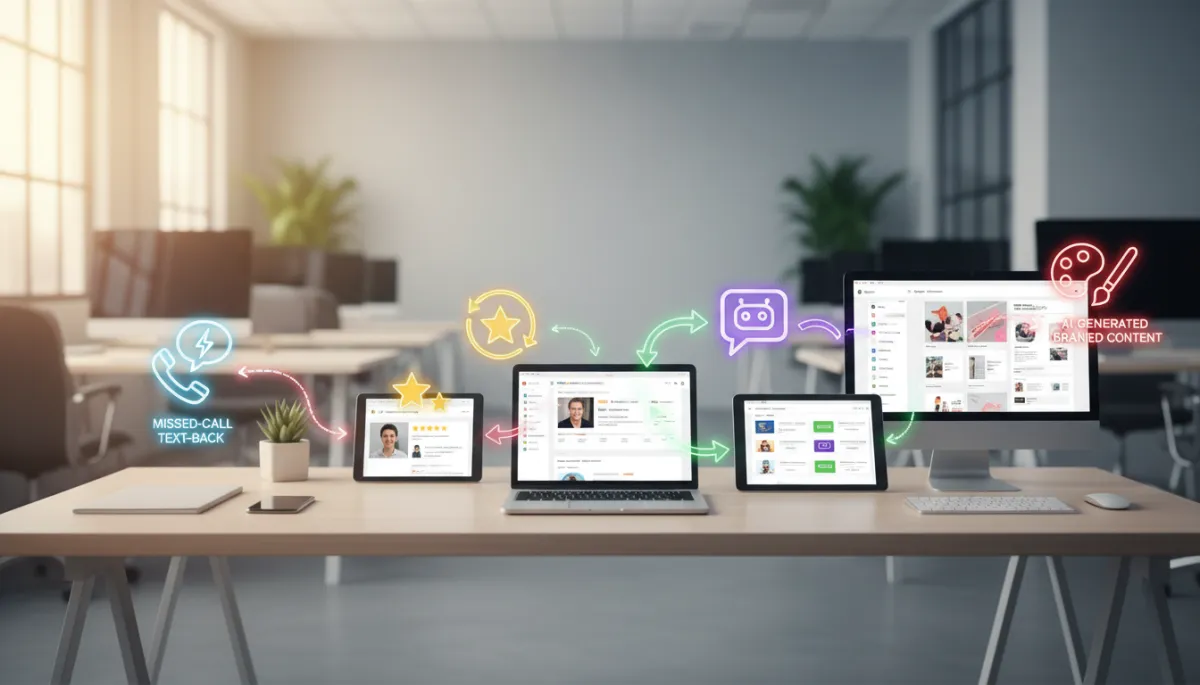
Top 5 AI Automation Tools for Small Businesses 2026
AI automation small business, business automation tools, AI tools 2026, small business AI, missed call automation
5 AI Automation Tools Every Small Business Should Be Using in 2026
If you run a small or mid-sized business, you’ve probably heard a lot of loud promises about AI. Most of it sounds like marketing fluff. This article skips the buzzwords and walks through five simple, proven tools that are actually making money for real businesses in 2026 — in plain language, with realistic expectations.
First, a quick reality check on small business AI
AI will not magically “run your business while you sleep.” It will not fix bad products, bad service, or bad offers. What it can do is handle repetitive, time-sensitive tasks so you and your team can focus on the work only humans can do: selling, solving problems, and building relationships.
A 2026 QuickBooks survey found that 77% of small businesses now use some form of AI regularly, mainly to work more efficiently — not to replace staff. TechRadar reports 72% of owners see AI as a way to help their teams, not cut them. That’s the mindset this list is built on: practical, not magical.
1. Missed-call text-back automation (your highest-ROI “no brainer”)
Let’s start with the easiest win. If your business gets phone calls — from prospects or existing customers — you are almost certainly losing money every time a call goes to voicemail. People rarely leave messages anymore. They just call the next business on Google.
What it does, in plain language
Missed-call text-back automation does one simple thing: when you miss a call, it sends a text back to that number within a few seconds. The text might say:
“Hi, this is Sarah from Lakeside Plumbing. Sorry we missed your call. How can we help?”
From there, the system can ask a couple of basic questions (name, issue, preferred time) and log everything into your CRM or inbox. You or your team can then follow up when you’re free, but you’ve already “caught” the lead while they’re still interested.
Who needs it most
Service businesses (plumbers, HVAC, electricians, cleaners, landscapers)
Medical, dental, and wellness clinics
Local retail and restaurants that get a lot of “quick question” calls
What result to expect
Industry data on missed-call solutions shows faster response times significantly increase conversions. In real terms, many small businesses see 10–30% more booked jobs from the same number of inbound calls, just because they stop dropping leads. The cost is usually under a few hundred dollars a month. One extra job a week often pays for it several times over.
💡 Reality check: This will not “close deals for you.” It just gives you a live conversation instead of a dead voicemail box. You still have to sell.
2. Automated review request systems (capture reviews at peak satisfaction)
You already know reviews matter. What most owners underestimate is how much money they leave on the table by asking for reviews “when we remember.” AI-powered review request tools fix that by asking every happy customer, at the right time, without nagging your team.
What it does, in plain language
These tools plug into your booking system, POS, or CRM. After a visit, completed job, or delivery, they automatically send a short text or email asking for feedback. If the customer is happy, they’re nudged to leave a Google or Facebook review. If they’re unhappy, the system can route them to you privately first so you can fix the issue before it becomes a one-star rant.
Who needs it most
Any local business that relies on Google Maps or Yelp for discovery
Trades and home services competing on local search
Clinics, salons, gyms, and hospitality businesses
What result to expect
Well-run systems often 2–4x your monthly review count within a few months. That can be the difference between 35 reviews and 150+ reviews, which directly impacts your ranking and click-through rate. Even a modest bump of 10–20 extra leads a month from higher visibility quickly covers the subscription cost.
💡 Reality check: AI can’t fake genuine service. If your underlying experience is poor, more reviews will just expose that faster.

Consistent, automated review requests can double or triple monthly new reviews.
3. AI-powered lead follow-up sequences (multi-touch, never forgets)
Most small businesses are good at getting leads, but bad at following up. A form comes in, someone means to call, then the day explodes. By the time you remember, the lead has gone cold or hired someone else. AI follow-up tools exist to stop that leakage.
What it does, in plain language
When a new lead fills out a form, clicks an ad, or messages you, the system automatically starts a prewritten sequence of texts and emails. It might:
Reply within 1–2 minutes confirming you got their request
Ask a couple of qualifying questions and offer times for a call or visit
Send reminders over the next few days if they go quiet
AI helps adjust tone and timing based on how the person responds, but you still control the words and offers. Think of it as a reliable assistant who never forgets to follow up.
Who needs it most
Any business running paid ads or lead-gen campaigns
B2B services with longer sales cycles (consultants, agencies, IT, professional services)
High-ticket local services (remodeling, roofing, specialty medical)
What result to expect
In practice, businesses that move from “manual follow-up when we can” to structured, automated sequences often see 20–50% more leads turning into real conversations. You’re not generating more leads; you’re just wasting fewer. If you’re spending thousands a month on ads, this is one of the fastest ways to improve ROI without increasing spend.
💡 Reality check: AI can’t fix a weak offer or bad sales process. It can only make sure people actually hear from you and get clear next steps.
4. AI chatbots for lead qualification and FAQs (24/7, no tech skills needed)
Website chatbots used to be clunky and annoying. In 2026, they’re finally good enough to be useful — if you keep them in their lane. The goal is not to replace your team. The goal is to answer common questions fast and filter out obvious non-fits before they hit your phone or inbox.
What it does, in plain language
An AI chatbot sits on your website or Facebook page and handles basic conversations like:
“Do you service my area?”
“What are your prices like?”
“Do you take walk-ins on Saturdays?”
You feed it your services, hours, pricing ranges, and policies in normal language. Modern tools don’t require coding; they guide you through setup with simple questions and templates. When a question is too complex, you can have it hand off to a human or collect contact details for a callback.
Who needs it most
Businesses with lots of repetitive questions (pricing, availability, basic policies)
Teams that can’t staff phones or chat 24/7 but get after-hours inquiries
What result to expect
When done right, chatbots can handle 30–60% of routine questions without human involvement and capture leads that would otherwise bounce. They won’t close complex deals, but they will keep people from leaving your site because no one responded.
💡 Reality check: Don’t pretend the bot is a human. Be upfront (“I’m an AI assistant”) and always offer a way to reach a real person.
5. AI-generated branded content (consistent, on-brand output)
Content is still painful for most small businesses. Social posts, emails, blog updates — everyone knows they “should” do them, but few have the time. AI content tools are not a replacement for your voice, but they are very good at helping you show up consistently without burning hours every week.
What it does, in plain language
You feed an AI tool examples of your past emails, posts, and website copy. It learns your tone and structure. From there, you can ask it to draft:
Weekly social posts promoting offers, tips, or FAQs
Follow-up emails after quotes or consultations
Simple blog updates or newsletters
Your job becomes editing and approving, not staring at a blank screen. Many tools now plug directly into schedulers like Buffer or your email platform, so you can line up a month of content in one sitting.
Who needs it most
Owners who know what to say but never have time to write it
Teams without in-house marketing staff or agencies
What result to expect
The big win here is consistency. Showing up in your customers’ inboxes and feeds every week keeps you top of mind. Expect better engagement and more “We saw your post and thought of you” inquiries over time. This is a slower-burn ROI than missed call automation, but it compounds.
💡 Reality check: AI content is only as good as the direction you give it. If you feed it vague prompts, you’ll get generic fluff. You still need a point of view.
How to prioritize these business automation tools
If you’re skeptical — and you should be — start with the tools closest to cash:
Missed-call text-back automation – plugs the biggest, most obvious leak in most local businesses.
Automated review requests – improves your visibility and trust without extra staff effort.
Lead follow-up sequences – squeezes more revenue out of leads you’re already paying for.
Chatbots and content – add these once the basic plumbing is in place.
Next step: get a clear-eyed view of your own gaps
Every business is at a different stage. Some of you already have a decent CRM but no automation. Others are still living out of a shared inbox and sticky notes. Before you sign up for another shiny “AI platform,” get an honest look at where you’re leaking leads, time, and reputation.
If you want a straight, no-hype assessment, book a free digital audit. We’ll review how your calls, reviews, leads, and content are working today, and map out which of these five AI automation small business tools would actually move the needle for you in the next 90 days — and which ones you can safely ignore for now.
No vague promises. Just a practical plan to turn AI tools 2026 into real-world revenue, using systems you and your team can actually manage.
Meta Title: 5 AI Automation Tools Every Small Business Should Be Using in 2026
Meta Description: Discover five practical AI automation tools for small businesses in 2026 — missed call automation, review systems, lead follow-up, chatbots, and branded content — explained in plain language with realistic ROI expectations.
